Finding the best neighborhood in Tokyo depends less on the city and more on how you plan to live in it. Each of Tokyo’s 23 wards, or individual cities, offers a different life than the next at the same budget.
If you’re moving to Tokyo for work, know that your list of potential locations to live narrows fast. Commute time does most of the cutting, and then your Japanese fluency, and then finally whether you can sign a lease without a Japanese guarantor.
Below is where to live in Tokyo if you’re relocating for work, and who each pick suits best.
Where to Live in Tokyo: Key Factors to Consider
For international professionals, choosing a Tokyo neighborhood comes down to a few things beyond the apartment itself.
Tokyo is a big city, but getting around is easy. The commute depends on which train line you live on, so choose the line before the station. A well-connected one like the JR Yamanote gives you a second route in case of a delay.
Language comes next. Minato and Shibuya have plenty of English speakers. In fact, you’ll find English-speaking doctors and international schools (you’ll find that even the supermarkets there stock your coffee brand). However, they’re also among the most expensive wards in Tokyo.
Cost usually decides the neighborhood. Furnished apartments are hard to find, and central rents are high, so most people trade commute time for location.
After that, it’s down to preference. Tokyo is very safe, even at night, but the difference between wards is noise, with Kabukicho and Roppongi being loud until the first trains of the day run.
You won’t get all of this in one place among the best areas to live in Tokyo, so pick the two factors you won’t compromise on.
The 7 Best Neighborhoods in Tokyo for International Professionals
The three factors determining the best areas to live in Tokyo are commute, your Japanese fluency, and housing costs. Under these parameters, here are seven neighborhoods served by Anyplace to consider.
1. Shibuya
- Best for: Tech and creative professionals, and younger workers who want to be near busy city life.
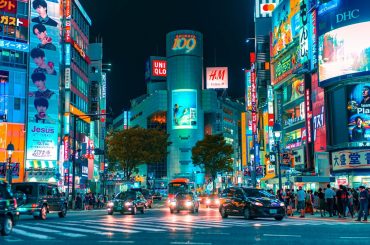
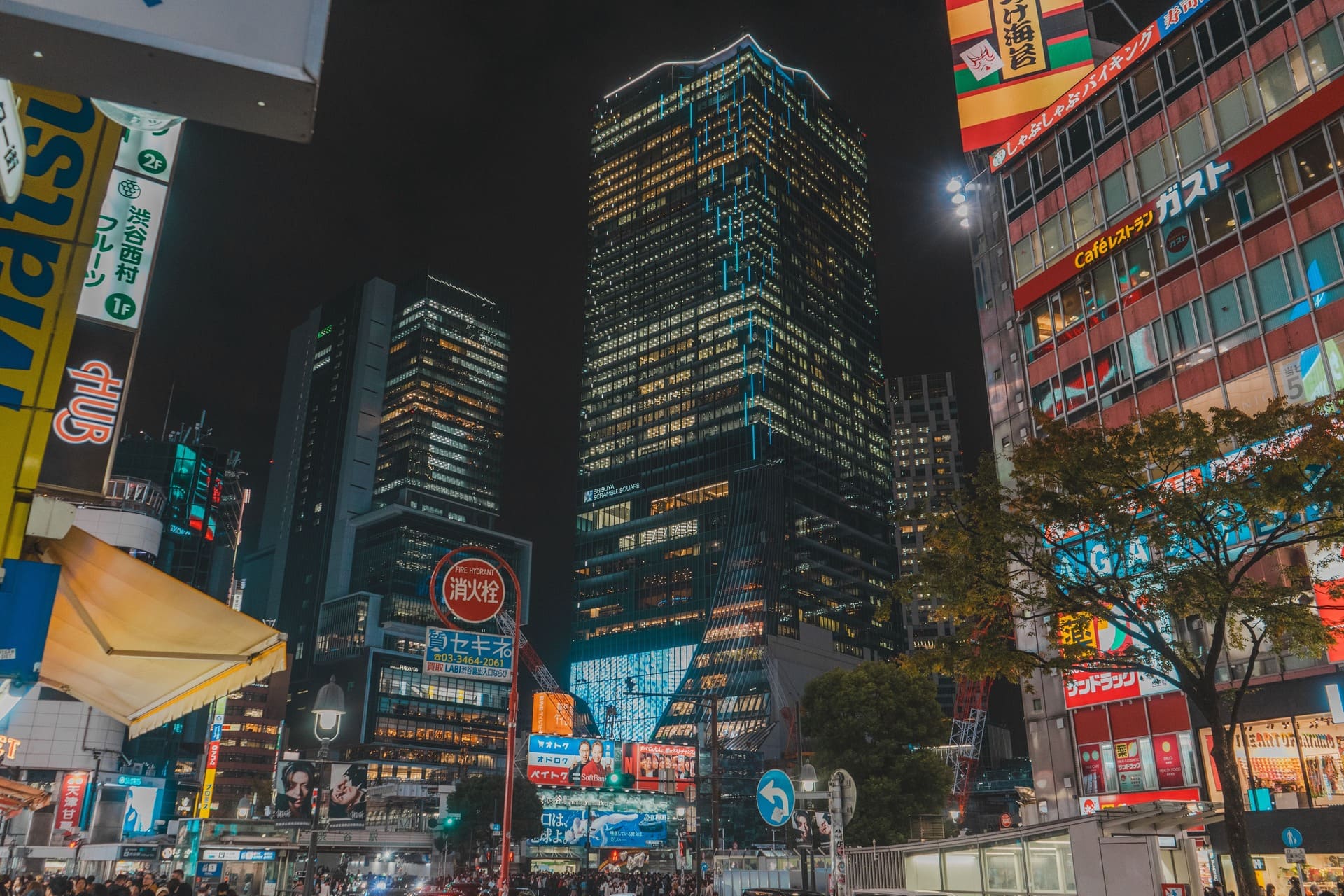
Shibuya is built around one of the busiest train stations in the world, and everything here radiates out from it. CyberAgent and Google Japan run their Japan operations in this ward, most of it a few minutes from the station, so if you’re in the industry you can walk to work. That’s what makes the rest of living in Shibuya worth it.
The trade-off is the crowds, and they are constant. (For the same access with quieter evenings, Ebisu, listed below, is one stop south on the Yamanote and mostly residential.)
Why professionals choose Shibuya:
- Most of the city is a direct ride on the JR Yamanote, plus eight more lines
- It’s one of Tokyo’s densest clusters of tech and startup offices
- There’s plenty of coworking spaces and English-friendly cafes
- It’s walkable to Ebisu and Daikanyama when you want a quieter night
2. Ebisu
- Best for: Remote and hybrid professionals who want access to central Tokyo without the noise.
Ebisu is calmer than Shibuya, and only a single stop down the Yamanote. Yebisu Garden Place, a city-within-a-city, is a few minutes from the station and home to a Michelin 3-star restaurant.
Past the main strip, the streets turn residential and are quiet enough to work from home on the days you don’t need to be in the office. Right by the station, however, it stays busy in the evenings.
Why professionals choose Ebisu:
- Four lines run through the station, including the Yamanote and the Hibiya
- Tech offices in Shibuya are minutes away at one stop north
- The trendy, low-rise neighborhood Daikanyama is a ten-minute walk away, while the international shopping district Hiroo is one stop away on the Hibiya
- There’s an established international community with English-speaking health clinics and schools nearby
- It’s one of Tokyo’s strongest dining and cafe scenes
3. Nihonbashi
- Best for: finance and corporate professionals working around Tokyo Station.
For anyone working in finance, an apartment here means a walk instead of a train ride; the Bank of Japan is headquartered in Nihonbashi. The area around it mixes old shops with newer office towers and restaurants.
After office hours and on weekends, the area gets very quiet, with far less going on than in Ebisu or Shibuya. If you want somewhere to go after work, those two are the better choice.
Why professionals choose Nihonbashi:
- The Toei Asakusa line goes direct to Haneda in about 35 minutes, the only line connecting both airports
- Tokyo Station is a short walk away, putting the Shinkansen within reach
- Otemachi is walkable, with Marunouchi one stop away
- Department store food halls and long-standing restaurants are nearby
4. Shibakoen
- Best for: professionals working in Minato who want a quiet, green base close to the office.
Shibakoen wraps around Shiba Park (Japan’s first public park, which opened in 1873). Toranomon and Kamiyacho’s office towers are a short walk away, so living here doesn’t cost you a commute at all.
Minato has Tokyo’s highest concentration of foreign residents at about 8% of the ward, and houses 81 of Japan’s 157 embassies. That makes finding an English-speaking health clinic or school easy.
Nightlife is limited, which is the trade-off for the quiet. Roppongi is a few minutes away, however, when you do want some nightlife.
Why professionals choose Shibakoen:
- Toranomon and Kamiyacho office towers are within walking distance
- The Toei Mita line at Shibakoen, with Daimon nearby for the Oedo and Asakusa lines
- Shiba Park is right outside, and the streets around it are quiet and residential
5. Shibaura
- Best for: professionals commuting to Shinagawa or Shinbashi, and anyone who flies often.
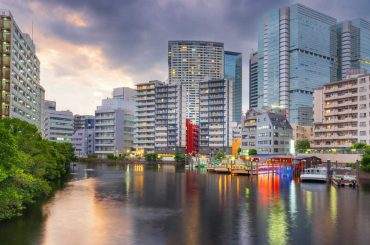
Shibaura is the waterfront edge of Minato, built along the canals between Tamachi and the bay. The buildings went up more recently than most of central Tokyo, which usually means better layouts than what you’ll find inland.
Shinagawa is one stop down the Yamanote Line, which puts the Haneda Airport within easy reach using the Tokaido Shinkansen bullet train or the Keikyu Railway. Shinbashi is a couple of minutes the other way.
The area leans residential and corporate, so evenings stay quiet. Ebisu or Shibuya make more sense if you want somewhere to go after work.
Why professionals choose Shibaura:
- Easy access to Haneda Airport via the Tokaido Shinkansen bullet train or the Keikyu Railway
- The JR Yamanote and Keihin-Tohoku lines at Tamachi
- Newer apartments than most of central Tokyo
- Canal-side streets and a quiet waterfront setting
6. Yotsuya
- Best for: professionals with families and anyone who wants access to Shinjuku without the crowds.
Yotsuya is a quiet, historic residential area between Shinjuku and the Imperial Palace. Four train lines run through it, but unlike Shinjuku next door, the streets around the station stay calm.
Sophia University’s international campus is three minutes from the station, and keeps a steady population of students, faculty, and their families year-round.
In Yotsuya, the quiet is the point. If you want more going on nearby, Shinjuku and Shibuya are both a few minutes away.
Why professionals choose Yotsuya:
- The JR Chuo and Sobu Lines, plus the Metro Marunouchi and Namboku Lines
- Shinjuku and Tokyo Station are both a few minutes away
- Sophia University and its international community are right at the station
7. Shinjuku
- Best for: professionals who often travel across the city and want everything at their door.
Shinjuku has two major things to its advantage for corporate foreigners: it’s one of the easier places in Tokyo to settle without being fluent in Japanese, and it’s home to the busiest railway station in the world (a title Guinness World Records has certified).
Shinjuku is without a doubt the best base if you’re moving around the city all week. It has better transit connections than Shibuya, not to mention English signage (and English-speaking health clinics close by).
Corporate towers and metropolitan government offices fill the west side of the ward, and the shopping and dining spread out from there.
The downsides include cost, crowds, and noise, with the entertainment district Kabukicho staying loud after dark. Yotsuya, a smaller neighborhood, is one stop over, with the same transit access and quieter streets.
Why professionals choose Shinjuku:
- Unmatched rail connections
- The West Shinjuku office towers and the metropolitan government district
- Direct trains to both Narita International Airport and Haneda Airport
- English signage and services throughout the station area
How Do You Choose the Right Housing Option?
Once you’ve selected potential Tokyo neighborhoods, the housing decision comes down to three paths for an extended stay: a purchase, a standard lease, or a mid-term furnished apartment, all of which differ in upfront cost and commitment.
| Housing option | Upfront cost | Move-in readiness | Commitment | Best for |
| Buying | Very high | Furnish yourself | Permanent | Long-term stays |
| Standard lease | 3 to 5 months’ rent (deposit, key money, fees) | Unfurnished | 2 years, plus renewal | 2+ year stays |
| Mid-term furnished rental | Low | Move-in ready | From 30 days | Those deciding on a neighborhood |
A standard lease costs 3 to 5 months of rent upfront, which covers the deposit (shikikin), agency fees, advance rent, and key money (reikin), which the landlord keeps. All of this is before you buy a single piece of furniture.
A furnished apartment skips that process. You can book for 30 days or longer, move in the day you land, and try out a neighborhood before committing to it.
Move in the Day You Arrive
Skip the two-year lease and the upfront costs. Anyplace apartments come furnished, with a dedicated home office and high-speed internet.
Where to Start in Tokyo
For most international professionals, Ebisu, Shibakoen, and Nihonbashi are generally considered the best areas to live in Tokyo.
A furnished, mid-term rental starting at 30+ days is the simplest and easiest option for an apartment, skipping all the typical upfront costs in Tokyo (not to mention the two-year lease).
Find a Tokyo Apartment Without all the Complications
Anyplace rents furnished, work-ready apartments by the month, with a home office and high-speed internet, on flexible terms from 30 days or more.