Tokyo is widely regarded as one of the top cities in the world. In fact, The Economist Intelligence Unit ranked Tokyo tenth in the 2026 Global Liveability Index, (a first for Tokyo) with perfect scores in stability, healthcare, and education. But moving to Tokyo takes planning.
Visa paperwork stacks up and the rental market quietly keeps foreigners out. And, of course, there’s cultural differences to prepare yourself for.
We’ve listed seven things to get right so your first year of living in Tokyo goes smoothly, whether you’re moving to Japan from the US or from anywhere else.
Seven Things Foreigners Should Know Before Moving to Tokyo
Some of what you should know is paperwork, while some is mindset. Here’s what tends to surprise newcomers to Tokyo.
1. Moving to Tokyo requires some admin work
Before you move to Japan, whether it’s for a job, a transfer, or a semester of study, there’s a stack of paperwork waiting for you.
It starts with the visa, and which one you apply for depends on why you’re coming. A job offer from a Japanese company gets you a Working visa, but if your company is relocating you to its Tokyo office, you’ll come in on an Intra-Company Transferee visa.
High earners can also check whether they qualify for the Highly Skilled Professional visa, a points-based track that shortens the wait for permanent residency from ten years to three.
Remote workers have a fourth path with the Digital Nomad visa that Japan launched in 2024. It lets you stay and work for foreign clients for six months, and after that you wait another six months before applying again.
Once the visa is sorted, the next step is figuring out where you’ll live. It’s best to have that settled before you land, because the rest of the paperwork depends on having a registered Japanese address.
A furnished mid-term rental is a good option here, since you can book it online from your home country and walk into a ready apartment on day one of your stay. (The next section below covers how these rentals work.)
When you land, immigration hands you your Residence Card (Zairyu Card), and you then have two weeks to take it to your local ward office and register your address.
From there, the card works as your primary ID in Japan.
Registering your address is also what gets you a My Number Card, the individual number used for tax and social security. The number is assigned automatically and arrives by mail a few weeks later, so there’s nothing to apply for. Once that’s done, you can open a Japanese bank account and enroll in National Health Insurance within 14 days if your employer doesn’t provide coverage.
2. Finding housing is challenging, especially for foreigners
Traditional leases in Japan come with a lot of paperwork and a lot of money upfront.
Standard contracts run for two years, and most apartments come completely unfurnished. Before moving in, you pay several months of rent, split between the security deposit (shikikin), key money (reikin), an agency fee, and advance rent.
And that’s just the standard process. Landlords often ask for a Japanese guarantor with stable income, or enrollment in a rent-guarantee company. Most listing sites are only in Japanese, and finding a property owner willing to rent to foreign tenants narrows your options down further.
Mid-term rentals can be a welcome alternative. These are monthly furnished apartments that you book for 30 days or longer, with no guarantor and no key money required.
Anyplace rents move-in ready apartments across Tokyo on these terms. Each one is a work-ready apartment with a proper home office and private high-speed internet. Utilities and internet are billed separately, at a flat monthly rate.
Renting by the month also gives you time to get to know the city before committing to it. You can spend a few months in one neighborhood, try another, and decide how you feel about the commute and the local culture before signing a two-year lease or buying anything.
Skip the Two-year Lease
Book a fully furnished, work-ready apartment in Tokyo for 30 days or longer. No guarantor and no key money, just a move-in-ready place with a workspace.
3. The cost of living in Tokyo might be lower than you think
Tokyo has had a reputation for being expensive, but that no longer holds up. The city dropped 30 places in Mercer’s cost-of-living ranking in a single year and now sits just above Houston, Texas, at 49th out of 226 cities.
Rent will probably take up the biggest share of your budget. A furnished 50-square-meter one-bedroom in a central area runs somewhere around ¥300,000 to ¥600,000 a month, with utilities and internet adding another ¥30,000 or so on top of that.
The rest of your spending stays modest by comparison. Food for one person who cooks most days lands around ¥45,000 a month. Transportation rarely goes past ¥10,000, and you will never need a car.
4. Work culture can be demanding
Long hours are part of the story in Japan, but they are getting shorter. Tighter overtime rules have been pulling down the annual working hours per person. While a typical workday starts around 9 in the morning, there is no fixed hour for leaving.
Communication style will also probably take a while to get used to. Japanese workplaces rely on indirect and implicit communication, so that much of what matters in a meeting never even gets said out loud.
Learning Japanese makes the biggest difference in having a positive work culture experience. Even a basic level of understanding allows you to follow more of what happens in a meeting. It also helps to watch how your colleagues handle situations you find confusing, and to ask a trusted coworker when something is unclear.
5. Public transport is one of Tokyo’s biggest strengths
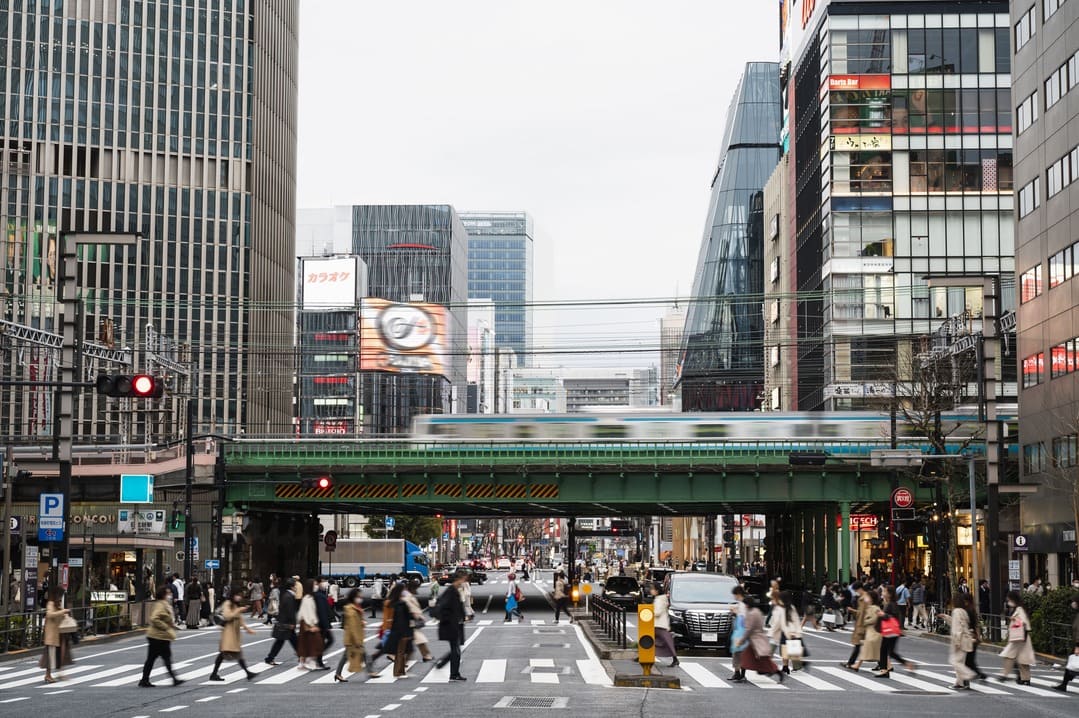
If one thing makes daily life in Tokyo easier than in most US cities, it’s the trains. They run on a schedule you can set your watch to, and a delay of a few minutes is rare enough that stations will hand out formal apology slips for it. Moving to Tokyo from the US will be a definite culture shock just in the transportation alone.
You’ll mostly use the Japan Railways (JR) lines (the Yamanote Line circles central Tokyo), plus the Tokyo Metro and Toei Subways. One prepaid IC card,
Suica or PASMO, covers nearly all of it.
To make the most of your experience, download a navigation app before you arrive. It will show you the fastest route between stations, so you can check the commute before you even pick a neighborhood.
6. Making friends can go either way
Tokyo has a large and long-established foreign community, especially in Roppongi and Hiroo. Language exchange meetups happen regularly, and international residents are a normal presence in the city.
Building close friendships still takes time, and the language barrier is the main reason why. Most social life in Tokyo happens in Japanese.
In-person Japanese classes are worth it for that reason, and they double as one of the easiest places to meet people, whether you work from an office or from home.
7. Cultural differences might take some getting used to
A lot of daily life in Tokyo runs on rules that nobody explains out loud, but everyone follows. Trash pickup is the clearest example. Each neighborhood has its own recycling system, with specific days assigned for each type of material, so figuring out your local schedule is one of the first things to do after you move in.
Smaller habits work the same way. Trains stay quiet, phone calls included. Couples can hold hands and say kiss goodbye without anyone reacting, though a long embrace on a platform will draw looks.
Cash is the habit most Americans have to relearn, because it gets used far more here than in the States. Convenience stores make that easy. 7-Eleven and Lawson will cover your ATM withdrawals, bill payments, and package pickups.
Other differences you will notice on your own; Tokyo is unusually safe, which is why laptops sit unattended on café tables, and kids ride the subway alone.
Apartments, though, run small. A typical one-bedroom (known as a 1LDK) is 30 to 50 square meters, compared with roughly 68 square meters for an average US one-bedroom.
The Bottom Line: Moving to Tokyo from the US or Anywhere Else
Tokyo earns its place among the most liveable cities in the world. Once you’re living there, you’ll see that claim hold up. The safety, transport, food, and sheer amount of city packed into one place all deliver.
Housing, however, may be the obstacle. Guarantor requirements, two-year leases, unfurnished apartments and several months of rent due before you even move in make for a rough introduction to a city you’re still figuring out.
A mid-term rental removes the guarantor, the key money, and the two-year commitment from the equation. Anyplace runs monthly furnished apartments for expats and remote workers in Tokyo, San Francisco, Los Angeles, and New York, so your first months in the city buy you information instead of a contract.
Book a Furnished Apartment in Tokyo
Anyplace apartments come move-in ready, with a dedicated home office and private high-speed internet, so you can get to work from day one. Utilities and internet are billed separately at a flat monthly rate, so there’s no surprises.